

Microsoft Research Lab – Redmond
新闻与深度文章

Welcome to Research Focus, a series of blog posts that highlights notable publications, events, code/datasets, new hires and other milestones from across the research community at Microsoft. Time-series forecasting is a technique used to predict future values based on previously…
Investigating vulnerabilities in LLMs; A novel total-duration-aware (TDA) duration model for text-to-speech (TTS); Generative expert metric system through iterative prompt priming; Integrity protection in 5G fronthaul networks:

| Robert Osazuwa Ness
Medfuzz tests LLMs by breaking benchmark assumptions, exposing vulnerabilities to bolster real-world accuracy.

This talk introduces Phi-3-Vision, an advanced and economical open-source multimodal model. As a member of the Phi-3 model family, Phi-3-Vision enhances language models by integrating multisensory skills, seamlessly combining language and vision capabilities.
In this episode, learn about the latest multimodal AI models, advanced benchmarks for AI evaluation and model self-improvement, and an entirely new kind of computer for AI inference and hard optimization. Discover how these research breakthroughs and more can help…
Learn what’s next for AI at Research Forum on Sept. 3; WizardArena simulates human-annotated chatbot games; MInference speeds pre-filling for long-context LLMs via dynamic sparse attention; Reef: Fast succinct non-interactive zero-knowledge regex proofs.
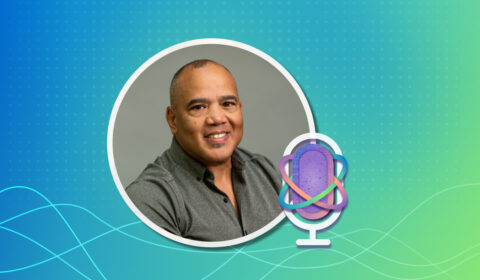
What’s Your Story: Lex Story
| Johannes Gehrke 和 Lex Story
Model maker and fabricator Lex Story helps bring research to life through prototyping. He discusses his take on failure; the encouragement and advice that has supported his pursuit of art and science; and the sabbatical that might inspire his next…
In this issue: Skeleton Posterior-guided OpTimization (SPOT) exhibits potential in various causal discovery tasks; Using visual imagery for an EEG-based brain–computer interface; Developing human-centered AI systems to assist creative professionals.
Redmond opens up to discuss its new tool, which can extract data from unstructured text using large language models. Microsoft’s GraphRAG is a new approach to Retrieval-Augmented Generation (RAG) that Redmond has described a “significant advance in enhancing the capability…