This is the Trace Id: 1fe27f7684e460359a6ad3fd679822c0
3/16/2026

Bajaj Finserv unifies its data estate on Microsoft Fabric and gains 40% productivity

As data volumes grew, Bajaj Finserv faced inconsistent data definitions and fragmented systems that slowed reviews, complicated governance, and made it harder for leaders to confidently stand behind decisions.

Bajaj Finserv rebuilt its data estate on Microsoft Fabric and OneLake, creating a single governed foundation with shared data definitions, end-to-end lineage, and consistent access controls across the organization.

With Fabric, Bajaj Finserv standardized how data is prepared, reviewed, and trusted. Data preparation improved by 40%, storage costs dropped 30%, and audit exceptions fell 25%, restoring confidence in everyday decision making.

Bajaj Finserv

Decisions in financial services live under scrutiny

In financial services, trust in the numbers determines the pace of decision making. Leaders must deliver results quickly without creating downstream friction during reporting or audits. But when teams rely on fragmented systems and inconsistent definitions, confidence erodes and reviews slow down. 

Bajaj Finserv operates a broad financial services portfolio spanning lending, insurance, and investments, where decisions must withstand scrutiny. As the company scaled, fragmented systems and parallel data views increased audit effort and delayed month-end and executive reviews.

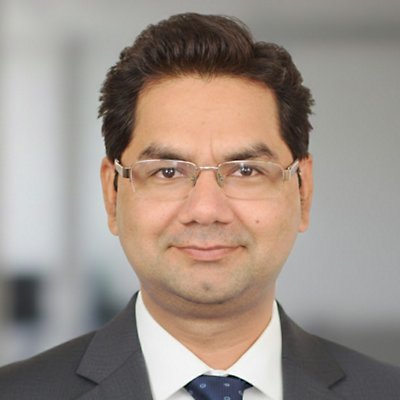
As Sagar Khatavkar, Data and AI Senior Vice President at Bajaj Finserv, puts it, “At the scale we operate, data inconsistency isn’t just a technical problem—it’s a governance risk. We needed a single, unified way of working that every function could rely on, from product management to risk and audit. Modernizing our data estate was fundamentally about one thing: making trust the baseline, not the exception.”

Bajaj Finserv needed a unified analytics approach that could deliver consistent insight, shared definitions, and governed visibility across the business.

Sagar Khatavkar, Data and AI Senior Vice President, Bajaj Finserv

“At the scale we operate, data inconsistency isn't just a technical problem—it’s a governance risk. We needed a single, unified way of working that every function could rely on, from product management to risk and audit. Modernizing our data estate was fundamentally about one thing: making trust the baseline, not the exception.”

Sagar Khatavkar, Data and AI Senior Vice President, Bajaj Finserv

Bajaj Finserv migrated its enterprise analytics workloads from dedicated SQL pools in Azure Synapse Analytics to Fabric Data Warehouse within Microsoft Fabric. The move supports larger workloads, clearer controls, and lower operating costs.

Fabric comprises two analytic engines—Data Warehouse and Fabric's new native execution engine for Spark—both of which store and operate on data in OneLake, the unified storage layer. 

Bajaj Finserv uses OneLake as its single, governed data foundation for analytics, establishing a consistent system of record across the business. Existing data in Azure Data Lake Storage is brought under OneLake through OneLake shortcuts, extending unified governance, access controls, and lineage of OneLake to both batch and streaming data without duplicating assets. This approach enforces consistent access controls, centralized governance, and end-to-end data lineage. As a result, analytics teams and business leaders work from the same trusted data under review and audit.

This shift changed how analytics reached the business. Power BI dashboards now read directly from governed data in OneLake through Direct Lake mode, eliminating separate extracts and refresh cycles. Business leaders see the same numbers that engineering teams produce, which reduces premeeting validation and accelerates decision-making.

Fabric Data Warehouse provides Baja Finserv with a fully managed SQL-based analytics engine operating on the same governed OneLake data. Warehouse tables align with lakehouse and Direct Lake models, enabling teams to establish repeatable design patterns without parallel pipelines or duplicate refresh processes. The team reused the majority of the existing T-SQL stored procedures from Synapse SQL pools. This reduced complexity and accelerated the migration to Fabric Data Warehouse.

This execution engine accelerated data engineering workloads, empowering teams to process large datasets quickly and reduce end-to-end preparation time as governed patterns scaled.

Operational and event-driven data followed the same pattern. Fabric Real-Time Intelligence brings streaming signals into the same governed environment. Investigations and compliance reviews no longer depend on separate systems with different controls. Events, context, and outcomes stayed connected.

As Nagaraju Gutlapalli, Head of Data Engineering at Bajaj Finserv, explains, “Moving to Fabric helped consolidate our data foundation into a governed, observable platform. Instead of managing fragmentation, my team now focuses on building reliable patterns that scale with closely integrated capabilities like Fabric Data Warehouse and Fabric's native executive engine for Spark. The shift reduced costs and operational friction and restored confidence.” 

Nagaraju Gutlapalli, Head of Data Engineering, Bajaj Finserv

“Moving to Fabric helped consolidate our data foundation into a governed, observable platform. Instead of managing fragmentation, my team now focuses on building reliable patterns that scale with closely integrated capabilities like Fabric Data Warehouse and Fabric's native executive engine for Spark. The shift reduced costs and operational friction and restored confidence.”

Nagaraju Gutlapalli, Head of Data Engineering, Bajaj Finserv

OneLake shortcuts preserved a single source of truth while referencing existing lake data. Fabric unified engineering, analytics, and consumption on the same foundation, so teams moved from landing to modeling to visualization without stitching tools, and the loop from question to answer shortened.

Financial stewardship became clearer because usage was visible. By consolidating analytics workloads on a shared Fabric capacity, Bajaj Finserv reduced operational overhead and gained clearer visibility into usage and cost across teams. Direct Lake semantic models read Delta tables in OneLake, so refreshes are quick and interactions remain responsive.

Implementing one source of truth, one step at a time

Bajaj Finserv knew that unifying its data foundation could not happen all at once. In a regulated environment, an uncontrolled transition would have created new audit risk and operational disruption. That risk would have undermined the very confidence the program was meant to restore. 

The team began by focusing on a small set of high-impact data domains where inconsistent data definitions and manual reconciliation created the most friction. Data was landed into OneLake with shared ownership and governance applied from the start. 

As Bajaj Finserv adopted Fabric as its unified analytics platform, confidence grew and consolidation expanded across additional domains. Redundant data pipelines and duplicate storage were retired, because they added cost without improving control. Standardized ingestion and modeling patterns in Fabric replaced bespoke workflows, reducing the number of handoffs where errors could occur and simplifying audit preparation.

Just as important, Fabric changed how teams worked day to day. Development, testing, and production followed consistent paths on a shared foundation. Common semantics and governed access reduced late-stage revisions, and governance became part of everyday workflows rather than a separate enforcement step. What once required manual coordination across teams became repeatable and predictable because teams were operating on a single Fabric platform. 

By progressing deliberately, Bajaj Finserv avoided the common tradeoff between speed and control. Each step reinforced the last, ensuring that new data products entered the environment with the same standards for lineage, access, and accountability. The result was not just a unified platform, but a unified way of working that teams could rely on as scale increased.

Fabric turns governed data into trusted decisions for AI-driven innovation

With a single governed foundation in place, Bajaj Finserv did not have to reinvent its operating model to introduce AI. The same practices that improved analytics and audit readiness through shared definitions, visible lineage, and consistent controls now support more advanced use cases without creating parallel pipelines or exception processes.

Vivek Patil, Senior Data Analyst, Bajaj Finserv

“With Fabric and OneLake, we finally operate from a governed, shared view of our data. Every dashboard reflects the same data definitions and lineage, which elevates trust across teams and strengthens how decisions are made. The reliability built into the platform shows up in every review cycle.”

Vivek Patil, Senior Data Analyst, Bajaj Finserv

That discipline is already paying dividends. Because Fabric standardizes data preparation, review, and delivery, teams can move faster without sacrificing oversight. Analytics-ready data is prepared 40% faster, trusted insights reach business leaders up to 50% faster, and audit exceptions have declined by 25%, all while operating from a single, governed platform.

A leaner architecture followed naturally. By consolidating data on OneLake and eliminating duplicate storage across domains, Bajaj Finserv reduced storage costs by 30% while strengthening long-term data reliability and governance.

As Vivek Patil, Senior Data Analyst at Bajaj Finserv, explains, “With Fabric and OneLake, we finally operate from a governed, shared view of our data. Every dashboard reflects the same data definitions and lineage, which elevates trust across teams and strengthens how decisions are made. The reliability built into the platform shows up in every review cycle.”

Because Fabric operates on governed, shared data, Bajaj Finserv can extend the same controls and visibility to emerging AI-driven use cases. Early AI initiatives, including credit decision support, fraud pattern detection, and personalized next best actions, build directly on this foundation. Models train and score against governed data in OneLake, and outputs return to the same environment for monitoring and audit. Innovation moves forward, using the same controls that already support day-to-day reporting and use cases driven by decision making.

For other organizations, the takeaway is practical. Bajaj Finserv’s experience shows that AI adoption does not require perfect data or a separate AI stack. It requires disciplined data foundations that teams already trust. When governance, accountability, and reuse are built into daily operations, AI becomes a natural extension of how the business works, and its benefits show up quickly in both speed and confidence.

Discover more about Bajaj Finserv on FacebookInstagramLinkedInX/Twitter, and YouTube.

Take the next step

Fuel innovation with Microsoft

Explore more customer stories

Find out how customers are achieving more with Microsoft products and solutions.
A man wearing headphones and smiling.

Talk to an expert about custom solutions

Let us help you create customized solutions and achieve your unique business goals.
Three people in a meeting room.

Transform work with Microsoft AI

Bring intelligence into the flow of work and help your organization achieve its goals with secure, scalable AI solutions.

Follow Microsoft