AI agents for therapeutic reasoning across biological contexts
- Michelle M. Li, Carnegie Mellon University
Therapeutic hypotheses can transfer across diseases but their relevance depends on biological context. The same target, perturbation, or treatment can produce different effects across cell types, disease states, genetic backgrounds, and patients. Therapeutic reasoning therefore requires methods that preserve context, test when evidence supports transfer, and identify where context-specific effects limit it. Although AI agents can perform therapeutic analyses, existing systems often fail to preserve biological context over long workflows, verify intermediate computational steps, or reconcile conflicting evidence across datasets and literature. We introduce Medea, an AI agent for therapeutic reasoning across biological contexts. Medea executes multi-step analyses using biological tools, machine learning models, and literature retrieval while enforcing verification during planning, execution, and evidence synthesis. We evaluate Medea across 5,673 open-ended analyses in three domains: cell type specific therapeutic target nomination in five diseases and 29 cell types, synthetic lethality prediction in 7 cancer cell lines, and immunotherapy response prediction from multimodal patient profiles. Using a previously unpublished epistatic miniarray profiling screen performed under two DNA-damaging treatments, we evaluate Medea on predicting synthetic lethality among 238,046 gene-gene pairs in yeast. Medea predicts these experimentally measured synthetic lethal interactions, indicating that its performance reflects biological relevance rather than information leakage from benchmark datasets. Across these evaluations, Medea improves performance over large language models, reasoning models, biomedical agents, and specialized machine learning models while maintaining low failure rates and calibrated abstention. These results show that verifiable AI agents can perform therapeutic analyses across biological contexts.
Speaker bio
Michelle M. Li is an Assistant Professor in Biomedical Engineering at Carnegie Mellon University. Her research focuses on developing novel AI algorithms that are grounded in biological and medical principles to minimize the risk of contextual error, where predictions appear reasonable but fail to account for critical context-specific information. These medical AI models are designed to generate personalized outputs based on the contexts in which they operate, dynamically adapting their reasoning to new cell types and tissues, medical specialties, patient populations, experimental and clinical workflows, and clinical roles. Prof. Li’s lab aims to build models that integrate across experimental and clinical workflows for advancing precision health, from modulating cellular trajectories to diagnosing rare and complex diseases to inferring treatment response.

Taille: MSR New England Generative Modeling & Sampling Seminar
-
-
-
-
-
-
-
-
-

Rare event analysis via stochastic optimal control
- Yuanqi Du & Carles Domingo-Enrich
-
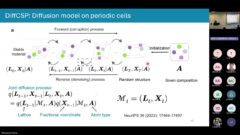
Constrained Generative AI for Materials Inverse Design
- Mouyang Cheng
-
-

Designing Dynamic Measure Transport for Sampling
- Aimee Maurais
-
-

Physics and information theory of generative diffusion
- Luca Ambrogioni
-
-
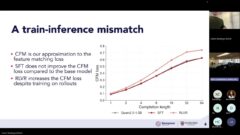
Matching features, not tokens: Energy-based fine-tuning of language models
- Mujin Kwun,
- Carles Domingo-Enrich
-
-
-

Generative Models for Molecular Dynamics Across Timescales
- Michael Plainer,
- Winfried Ripken,
- Gregor Lied
-
-

Q-learning with Flow-Matching Policies
- Qiyang (Colin) Li
-
-
-

A non-Markovian approach to diffusion-based sampling
- Lorenz Richter
-
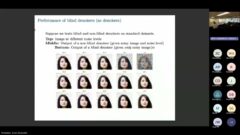
Blind denoising diffusion models and the blessings of dimensionality
- Aram-Alexandre Pooladian